Quick Answer: Stripers Not Biting
If the fish aren’t biting on Lake Texoma, a professional striper guide doesn’t sit and wait. They adjust location, depth, bait presentation, and tactics based on sonar readings, seasonal patterns, and fish behavior. Experienced guides like Aaron Sharp constantly adapt — moving to new structure, changing live bait rigs, switching to artificial lures, or adjusting water depth — to stay on active fish.
Let’s Address the Real Concern
Every client thinks it.
Some ask it directly.
Some don’t.
“What if we book a trip… and the fish just aren’t biting?”
Fair question.
You’re investing time.
You’re driving.
You’re bringing family or clients.
You want action.
Here’s the truth about striper fishing on Lake Texoma:
Striped bass live here 365 days a year.
They don’t disappear.
But their mood, depth, and feeding behavior change constantly.
That’s where experience matters.
Stripers Don’t Stop Feeding — They Shift
Striped bass are predators.
They feed based on:
Water temperature
Oxygen levels
Baitfish movement
Wind direction
Light penetration
Seasonal patterns
Spawning cycles
If they aren’t biting where we start, it simply means one thing:
We haven’t found the active group yet.
Big difference.
What a Professional Guide Does When Fish Slow Down
Here’s what separates an average guide from a full-time professional like Aaron:
1. Move. Quickly.
Some guides anchor and hope.
Aaron watches:
Sonar returns
Bait clouds
Fish arches
Thermocline position
If the screen goes quiet, we move.
On Texoma, fish often travel in wolf packs.
Miss them by 100 yards and it feels dead.
Move 200 yards?
Chaos.
2. Change Depth
Stripers might be:
12 feet in spring
25–35 feet in summer
Suspended over 60 feet of water
Pinned to bottom in winter
Sometimes they’re not shallow.
Sometimes they’re not deep.
They’re just… different.
We adjust:
Egg sinker weight
Leader length
Drift speed
Anchor position
Small adjustments = big results.
3. Switch Presentation
Live bait not working?
We might:
Downsize hooks
Change to lighter leaders
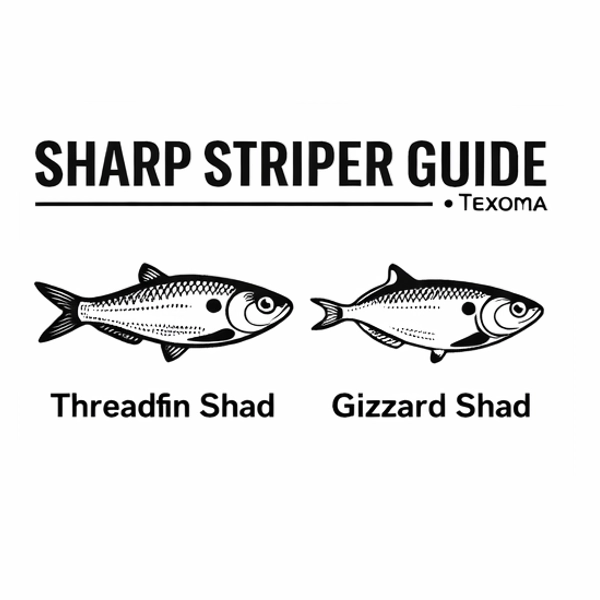
Switch from gizzard shad to threadfin
Free-line instead of bottom rig
Move to artificial slabs or topwater
Stripers can be aggressive.
Or neutral.
Or pressured.
Presentation matters.
4. Follow the Bait
Striped bass follow shad.
When shad move, stripers move.
Aaron constantly scans for:
Bait balls
Flickering surface activity
Birds working
Temperature breaks
If the groceries move, the predators follow.
We follow the groceries.
The Reality of Fishing (That Most Won’t Say)
Some days are wide-open.
Some days require work.
That’s fishing.
But here’s what matters:
👉 On Lake Texoma, there are always catchable fish somewhere.
Experience is knowing:
Where to start
When to leave
How long to give a spot
When to adjust depth
When to switch tactics
That only comes from being on the water almost daily.
Do We Guarantee Fish?
Honest answer?
No guide can guarantee fish.
Anyone who does isn’t being straight.
But here’s what we do guarantee:
Maximum effort
Tactical adjustments
Relocation when needed
Full trip time (never rushed)
Professional decision-making
We fish until:
The legal limit is reached
Or your arms are worn out
Why Texoma Is Different From Most Lakes
Lake Texoma is one of the only lakes in the country with a self-sustaining striped bass population.
That means:
Natural reproduction occurs
Strong year classes exist
Large biomass of fish
High catch rates historically
Stripers aren’t “if” fish here.
They’re “where and how” fish.
That’s a big difference.
Seasonal Examples: When People Think It’s “Slow”
Spring (Spawn Period)
Fish push upriver.
Some are locked in spawn mode.
They may not chase aggressively.
Solution?
Target post-spawn females staging nearby.
Summer
Deep water.
Thermocline forms.
Fish suspend.
Solution?
Use electronics and vertical presentations.
Fall
Shad migration.
Wind-driven bait movement.
Solution?
Chase windblown banks and surface activity.
Winter
Fish stack deep.
Metabolism slows.
Solution?
Slow presentations. Precise depth control.
The Mental Game of Fishing
Here’s something most don’t talk about.
Clients sometimes interpret:
20 minutes without a bite
as“The fish aren’t biting.”
But underwater?
They may be:
Moving through
Circling bait
Suspended slightly off depth
Fishing isn’t instant gratification every minute.
But when the school activates?
It can go from zero to limit in 15 minutes.
We’ve seen it hundreds of times.
Electronics Matter More Than Luck
Modern sonar is a game changer.
We can see:
Fish under the boat
Bait density
Depth changes
Structure
Suspended schools
If fish are present but inactive, we adjust.
If fish aren’t there, we leave.
Luck has nothing to do with it.
Data does.
What Clients Notice After the Trip
Clients often say:
“I didn’t realize how much adjusting you were doing.”
That’s because:
You’re fishing
Aaron is scanning, repositioning, monitoring wind, adjusting rigs
You see rods.
He sees patterns.
FAQ-Striper Won’t Bite
What happens if we don’t catch our limit?
Limits aren’t guaranteed, but effort and adjustments are. On Lake Texoma, catch rates are consistently strong year-round. We stay mobile and adjust tactics to maximize opportunity.
Can bad weather stop the bite?
Wind often helps striper fishing. Severe storms may delay or reschedule trips for safety, but light rain and wind can improve the bite.
Do you offer re-booking if fishing is slow?
Fishing is never guaranteed. However, we work extremely hard to put clients on fish and build long-term relationships. Many clients return year after year because of consistent effort and results.
Is summer fishing slower?
Not necessarily. Fish move deeper in summer, but with electronics and proper live bait presentation, summer can produce excellent limits.
The Bottom Line
If the fish aren’t biting in one spot…
We move.
If one depth isn’t working…
We adjust.
If one tactic fails…
We change.
That’s the difference between hiring:
A guy with a boat
and
A full-time Lake Texoma striper professional.
When you book with Aaron Sharp, you’re not betting on luck.
You’re investing in:
Experience
Pattern recognition
Seasonal knowledge
Real-time adjustment
Professional decision-making
And on Lake Texoma…
That makes all the difference.
If you’re ready to fish with a guide who adapts, adjusts, and works every minute of your trip to stay on active fish:
👉 Book your Lake Texoma striper trip today. Call 580-380-5357. Follow Lake Texoma Fishing Guides for more information.
Related Lake Texoma Striper Fishing Guides
If you’re planning a trip or want to learn more about seasonal patterns, tactics, and equipment, explore these in-depth resources:
Artificial Lures on Lake Texoma – When and how to throw slabs, swimbaits, and topwater.
Winter Deadsticking on Lake Texoma – Cold-water tactics for suspended stripers.
Complete Guide to Striper Fishing – Seasonal patterns, depth movements, and feeding behavior.
Lake Texoma Topwater Lures – When stripers explode on the surface.
Striper Fishing with Live Bait – Rigging, shad selection, and depth strategy.
Recent Comments